Gênesis 11

ARC · Chapter 11/50

1E era toda a terra d'uma mesma lingua, e d'uma mesma falla.

2E aconteceu que, partindo elles do Oriente, acharam um valle na terra de Shinar; e habitaram ali.

3E disseram uns aos outros: Eia, façamos tijolos, e queimemol-os bem. E foi-lhes o tijolo por pedra, e o betume por cal.

4E disseram: Eia, edifiquemos nós uma cidade e uma torre cujo cume toque nos céus, e façamo-nos um nome, para que não sejamos espalhados sobre a face de toda a terra.

5Então desceu o Senhor para ver a cidade e a torre que os filhos dos homens edificavam;

6E disse. Eis que o povo é um, e todos teem uma mesma lingua; e isto é o que começam a fazer: e agora, não haverá restricção para tudo o que elles intentarem fazer?

7Eia, desçamos, e confundamos ali a sua lingua, para que não intenda um a lingua do outro.

8Assim o Senhor os espalhou d'ali sobre a face de toda a terra: e cessaram de edificar a cidade.

9Por isso se chamou o seu nome Babel, porquanto ali confundiu o Senhor a lingua de toda a terra, e d'ali os espalhou o Senhor sobre a face de toda a terra.

10Estas são as gerações de Sem: Sem era da edade de cem annos, e gerou a Arpachshad, dois annos depois do diluvio.

11E viveu Sem, depois que gerou a Arpachshad, quinhentos annos; e gerou filhos e filhas.

12E viveu Arpachshad trinta e cinco annos, e gerou a Selah.

13E viveu Arpachshad depois que gerou a Selah, quatrocentos e tres annos; e gerou filhos e filhas.

14E viveu Selah, trinta annos, e gerou a Eber:

15E viveu Selah, depois que gerou a Eber, quatrocentos e tres annos, e gerou filhos e filhas.

16E viveu Eber trinta e quatro annos e gerou a Peleg:

17E viveu Eber, depois que gerou a Peleg, quatrocentos e trinta annos, e gerou filhos e filhas.

18E viveu Peleg trinta annos, e gerou a Rehu:

19E viveu Peleg, depois que gerou a Rehu, duzentos e nove annos, e gerou filhos e filhas.

20E viveu Rehu, trinta e dois annos, e gerou a Serug:

21E viveu Rehu, depois que gerou a Serug, duzentos e sete annos e gerou filhos e filhas.

22E viveu Serug trinta annos, e gerou a Nahor:

23E viveu Serug, depois que gerou a Nahor, duzentos annos, e gerou filhos e filhas.

24E viveu Nahor vinte e nove annos, e gerou a Terah:

25E viveu Nahor, depois que gerou a Terah, cento e dezenove annos, e gerou filhos e filhas.

26E viveu Terah, setenta annos, e gerou a Abrão, a Nahor, e a Haran.

27E estas são as gerações de Terah: Terah gerou a Abrão, a Nahor, e a Haran: e Haran gerou a Lot

28E morreu Haran estando seu pae Terah, ainda vivo, na terra do seu nascimento, em Ur dos Chaldeus.

29E tomaram Abrão e Nahor mulheres para si: o nome da mulher de Abrão era Sarai, e o nome da mulher de Nahor era Milcah, filha de Haran, pae de Milcah, e pae de Iscah.

30E Sarai foi esteril, e não tinha filhos.

31E tomou Terah a Abrão seu filho, e a Lot filho de Haran, filho de seu filho, e a Sarai sua nora, mulher de seu filho Abrão, e saiu com elles de Ur dos Chaldeus, para ir á terra de Canaan; e vieram até Haran, e habitaram ali

32E foram os dias de Terah duzentos e cinco annos: e morreu Terah em Haran.

📖 Chapter study

Summary

Humanity, united by a single language, tries to build a tower reaching to heaven at Babel; God confuses their languages and scatters the people over the earth; the genealogy from Shem to Abram follows.

Explanation

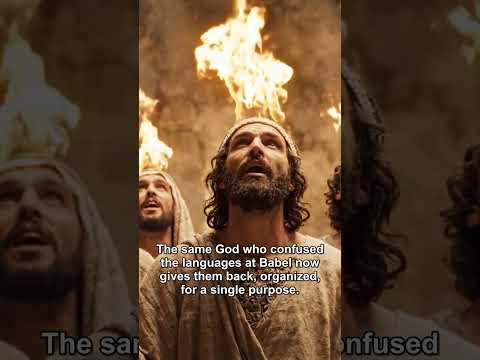
The Tower of Babel is the portrait of a humanity that, instead of 'replenishing the earth' as God had commanded (Genesis 9:1), unites to make a name for itself and resist being scattered — an act of collective pride. God intervenes by confusing their languages, not as a cruel punishment, but as a way to keep that unchecked ambition from deepening even further. The result, the diversity of languages and peoples, is symbolically reversed centuries later at Pentecost (Acts 2), when people of various languages understand one another through the Holy Spirit. The second half of the chapter, with the genealogy from Shem to Abram, quietly prepares the most important turning point of the book: out of a scattered and confused humanity, God will choose a single family to bless the whole world.

Fun facts

  • 'Babel' has a sound connection to the Hebrew verb 'balal' (to confuse), an intentional wordplay in the text; the historical city of Babylon did in fact have large temple towers called ziggurats, monumental structures that archaeologists have identified in the ruins of the region.
  • The chapter's final genealogy (Shem to Abram) is the literary bridge that links the 'universal' history of chapters 1-11 to the 'particular' history of the people of Israel, which begins in chapter 12 — a fundamental structural turning point in the book.

Verse-by-verse explanation

  1. Gênesis 11:1Before recounting the building of the tower, the text sets the scene: all of humanity still spoke a single language, which explains how they were able to organize together for the project described next.
  2. Gênesis 11:2People migrate from the east and find a plain in the land of Shinar—the same region as Babylon, where the city of Babel will be built.
  3. Gênesis 11:3Describes the technology used in the building: baked brick instead of stone, and tar instead of mortar—materials typical of Mesopotamia, where natural stone was scarce.
  4. Gênesis 11:4Building a city and a very tall tower was, above all, a way to become a strong, well-known people before humanity spread across the whole earth. Their fear was disappearing into the crowd without a trace, which is why they wanted to “make us a name” and stay concentrated in one place. This goes directly against what God had asked back in Genesis 1—to fill the whole earth, not cluster in a single spot.
  5. Gênesis 11:5Saying that the LORD “came down to see” is an ironic way of describing the scene: however tall the tower looked to its builders, it was still too small for Him to need to stoop down to see it.
  6. Gênesis 11:6God acknowledges the power of a people united by a single language—not as something bad in itself, but recognizing that this unity was being used for a project contrary to what He had asked, which was to spread out over the earth.
  7. Gênesis 11:7Confusing the language here doesn’t mean making everyone speak gibberish—it means suddenly creating different languages, so that groups who once understood each other stop understanding one another. Unable to coordinate anything among themselves, the people stop building and scatter into groups by language—which is exactly what the text is trying to explain: why there are peoples with such different languages.
  8. Gênesis 11:8With the languages confused, the group can no longer understand each other or continue the project, and the people scatter across the earth—exactly what they feared and had tried to avoid by building the tower.
  9. Gênesis 11:9The name “Babel” sounds similar, in Hebrew, to the word for “confuse,” and it’s this similar sound that the text uses to explain the origin of the city’s name. Outside the Bible, we know that in other ancient languages of the region “Babel” meant something like “gate of the god”—so it’s quite possible the author is playing on the sound of the words to tell this story, rather than recording the name’s real origin.
  10. Gênesis 11:10Another genealogy begins, this time from Shem down to Abram at the end of the chapter—a shorter list than the one in chapter 5, but following the same pattern of ages and sons.
  11. Gênesis 11:11After fathering Arphaxad, Shem still lived 500 more years, having other sons and daughters—following the same pattern used in the earlier genealogies.
  12. Gênesis 11:12Arphaxad fathers Salah at age 35, continuing the line that connects Shem to Abram.
  13. Gênesis 11:13After fathering Salah, Arphaxad lived 403 more years, with other sons and daughters.
  14. Gênesis 11:14Salah fathers Eber at age 30—the name that, a few generations earlier in chapter 10, had already been linked to the origin of the word “Hebrew.”
  15. Gênesis 11:15After fathering Eber, Salah lived 403 more years, having other sons and daughters.
  16. Gênesis 11:16Eber fathers Peleg at age 34—the same Peleg whose name, in chapter 10, was explained as tied to the division of the peoples after Babel.
  17. Gênesis 11:17After fathering Peleg, Eber lived 430 more years, with other sons and daughters.
  18. Gênesis 11:18Peleg fathers Reu at age 30, continuing the line that draws ever closer to Abram.
  19. Gênesis 11:19After fathering Reu, Peleg lived 209 more years, having other sons and daughters—a lifespan already much shorter than that of the ancestors before the flood.
  20. Gênesis 11:20Serug is Terah’s grandfather and Abram’s great-grandfather—another link in the line that connects the flood, through Shem, directly to the patriarch God would choose.
  21. Gênesis 11:21After fathering Serug, Reu lived 207 more years, with other sons and daughters.
  22. Gênesis 11:22Serug fathers Nahor at age 30, bringing the list even closer to Abram’s birth.
  23. Gênesis 11:23After fathering Nahor, Serug lived 200 more years, having other sons and daughters.
  24. Gênesis 11:24Nahor fathers Terah at age 29—the father of Abram, who will close out this genealogy in the next verse.
  25. Gênesis 11:25After fathering Terah, Nahor lived 119 more years, with other sons and daughters, closing the second-to-last link before reaching Abram.
  26. Gênesis 11:26At age 70, Terah fathers three sons: Abram, Nahor, and Haran—the first of them, Abram, will be the protagonist of the rest of the book of Genesis.
  27. Gênesis 11:27Repeats Terah’s three sons and introduces Lot, son of Haran—the nephew who will accompany Abram through much of the journey told in the coming chapters.
  28. Gênesis 11:28Haran dies while his father is still alive, in the family’s hometown, Ur of the Chaldees—which is why Lot, his son, grows up under the care of his grandfather and later his uncle Abram.
  29. Gênesis 11:29Introduces the wives of Abram and Nahor: Sarai, who will be central to the story from here on, and Milcah, daughter of the now-deceased Haran.
  30. Gênesis 11:30A detail that will weigh on the whole story that follows: Sarai could not have children—this lack of offspring is the backdrop for the promise God makes to Abram in the next chapter.
  31. Gênesis 11:31Ur of the Chaldees was one of the great cities of Mesopotamia, quite far from Canaan—Terah’s family leaving from there was a long migration, not a quick trip. They stopped partway, in the city of Haran, and settled there for a while before the journey continued with Abram in the following chapters.
  32. Gênesis 11:32Closes the genealogy with Terah’s death, at 205 years old, in Haran—the city where the family had stopped on the way to Canaan, and from which Abram will set out alone with his household.

Watch the story of this passage

Videos from our channel that tell what happens in Genesis 11.

Chapters

Our apps

Our apps →

Bible in Stories

The Bible told as a story, with audio and videos.

📱 Get the app

World in Stories

True stories of humanity that sound made up.

Feito! Pequenas Vitórias

A light daily routine for people who lose track of the day.