1 Samuel 17

KJV · Capítulo 17/31

1Now the Philistines gathered together their armies to battle, and were gathered together at Shochoh, which belongeth to Judah, and pitched between Shochoh and Azekah, in Ephes–dammim.

2And Saul and the men of Israel were gathered together, and pitched by the valley of Elah, and set the battle in array against the Philistines.

3And the Philistines stood on a mountain on the one side, and Israel stood on a mountain on the other side: and there was a valley between them.

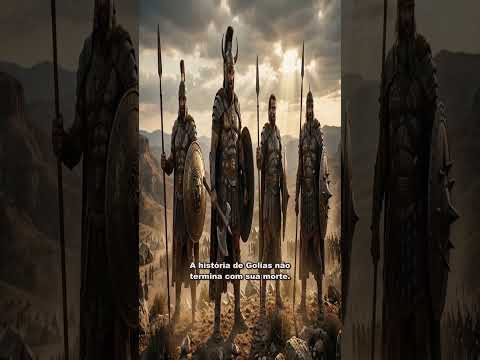
4And there went out a champion out of the camp of the Philistines, named Goliath, of Gath, whose height was six cubits and a span.

5And he had an helmet of brass upon his head, and he was armed with a coat of mail; and the weight of the coat was five thousand shekels of brass.

6And he had greaves of brass upon his legs, and a target of brass between his shoulders.

7And the staff of his spear was like a weaver’s beam; and his spear’s head weighed six hundred shekels of iron: and one bearing a shield went before him.

8And he stood and cried unto the armies of Israel, and said unto them, Why are ye come out to set your battle in array? am not I a Philistine, and ye servants to Saul? choose you a man for you, and let him come down to me.

9If he be able to fight with me, and to kill me, then will we be your servants: but if I prevail against him, and kill him, then shall ye be our servants, and serve us.

10And the Philistine said, I defy the armies of Israel this day; give me a man, that we may fight together.

11When Saul and all Israel heard those words of the Philistine, they were dismayed, and greatly afraid.

12Now David was the son of that Ephrathite of Beth–lehem–judah, whose name was Jesse; and he had eight sons: and the man went among men for an old man in the days of Saul.

13And the three eldest sons of Jesse went and followed Saul to the battle: and the names of his three sons that went to the battle were Eliab the firstborn, and next unto him Abinadab, and the third Shammah.

14And David was the youngest: and the three eldest followed Saul.

15But David went and returned from Saul to feed his father’s sheep at Beth–lehem.

16And the Philistine drew near morning and evening, and presented himself forty days.

17And Jesse said unto David his son, Take now for thy brethren an ephah of this parched corn, and these ten loaves, and run to the camp to thy brethren;

18And carry these ten cheeses unto the captain of their thousand, and look how thy brethren fare, and take their pledge.

19Now Saul, and they, and all the men of Israel, were in the valley of Elah, fighting with the Philistines.

20And David rose up early in the morning, and left the sheep with a keeper, and took, and went, as Jesse had commanded him; and he came to the trench, as the host was going forth to the fight, and shouted for the battle.

21For Israel and the Philistines had put the battle in array, army against army.

22And David left his carriage in the hand of the keeper of the carriage, and ran into the army, and came and saluted his brethren.

23And as he talked with them, behold, there came up the champion, the Philistine of Gath, Goliath by name, out of the armies of the Philistines, and spake according to the same words: and David heard them.

24And all the men of Israel, when they saw the man, fled from him, and were sore afraid.

25And the men of Israel said, Have ye seen this man that is come up? surely to defy Israel is he come up: and it shall be, that the man who killeth him, the king will enrich him with great riches, and will give him his daughter, and make his father’s house free in Israel.

26And David spake to the men that stood by him, saying, What shall be done to the man that killeth this Philistine, and taketh away the reproach from Israel? for who is this uncircumcised Philistine, that he should defy the armies of the living God?

27And the people answered him after this manner, saying, So shall it be done to the man that killeth him.

28And Eliab his eldest brother heard when he spake unto the men; and Eliab’s anger was kindled against David, and he said, Why camest thou down hither? and with whom hast thou left those few sheep in the wilderness? I know thy pride, and the naughtiness of thine heart; for thou art come down that thou mightest see the battle.

29And David said, What have I now done? Is there not a cause?

30And he turned from him toward another, and spake after the same manner: and the people answered him again after the former manner.

31And when the words were heard which David spake, they rehearsed them before Saul: and he sent for him.

32And David said to Saul, Let no man’s heart fail because of him; thy servant will go and fight with this Philistine.

33And Saul said to David, Thou art not able to go against this Philistine to fight with him: for thou art but a youth, and he a man of war from his youth.

34And David said unto Saul, Thy servant kept his father’s sheep, and there came a lion, and a bear, and took a lamb out of the flock:

35And I went out after him, and smote him, and delivered it out of his mouth: and when he arose against me, I caught him by his beard, and smote him, and slew him.

36Thy servant slew both the lion and the bear: and this uncircumcised Philistine shall be as one of them, seeing he hath defied the armies of the living God.

37David said moreover, The Lord that delivered me out of the paw of the lion, and out of the paw of the bear, he will deliver me out of the hand of this Philistine. And Saul said unto David, Go, and the Lord be with thee.

38And Saul armed David with his armour, and he put an helmet of brass upon his head; also he armed him with a coat of mail.

39And David girded his sword upon his armour, and he assayed to go; for he had not proved it. And David said unto Saul, I cannot go with these; for I have not proved them. And David put them off him.

40And he took his staff in his hand, and chose him five smooth stones out of the brook, and put them in a shepherd’s bag which he had, even in a scrip; and his sling was in his hand: and he drew near to the Philistine.

41And the Philistine came on and drew near unto David; and the man that bare the shield went before him.

42And when the Philistine looked about, and saw David, he disdained him: for he was but a youth, and ruddy, and of a fair countenance.

43And the Philistine said unto David, Am I a dog, that thou comest to me with staves? And the Philistine cursed David by his gods.

44And the Philistine said to David, Come to me, and I will give thy flesh unto the fowls of the air, and to the beasts of the field.

45Then said David to the Philistine, Thou comest to me with a sword, and with a spear, and with a shield: but I come to thee in the name of the Lord of hosts, the God of the armies of Israel, whom thou hast defied.

46This day will the Lord deliver thee into mine hand; and I will smite thee, and take thine head from thee; and I will give the carcases of the host of the Philistines this day unto the fowls of the air, and to the wild beasts of the earth; that all the earth may know that there is a God in Israel.

47And all this assembly shall know that the Lord saveth not with sword and spear: for the battle is the Lord’s, and he will give you into our hands.

48And it came to pass, when the Philistine arose, and came and drew nigh to meet David, that David hasted, and ran toward the army to meet the Philistine.

49And David put his hand in his bag, and took thence a stone, and slang it, and smote the Philistine in his forehead, that the stone sunk into his forehead; and he fell upon his face to the earth.

50So David prevailed over the Philistine with a sling and with a stone, and smote the Philistine, and slew him; but there was no sword in the hand of David.

51Therefore David ran, and stood upon the Philistine, and took his sword, and drew it out of the sheath thereof, and slew him, and cut off his head therewith. And when the Philistines saw their champion was dead, they fled.

52And the men of Israel and of Judah arose, and shouted, and pursued the Philistines, until thou come to the valley, and to the gates of Ekron. And the wounded of the Philistines fell down by the way to Shaaraim, even unto Gath, and unto Ekron.

53And the children of Israel returned from chasing after the Philistines, and they spoiled their tents.

54And David took the head of the Philistine, and brought it to Jerusalem; but he put his armour in his tent.

55And when Saul saw David go forth against the Philistine, he said unto Abner, the captain of the host, Abner, whose son is this youth? And Abner said, As thy soul liveth, O king, I cannot tell.

56And the king said, Enquire thou whose son the stripling is.

57And as David returned from the slaughter of the Philistine, Abner took him, and brought him before Saul with the head of the Philistine in his hand.

58And Saul said to him, Whose son art thou, thou young man? And David answered, I am the son of thy servant Jesse the Beth–lehemite.

📖 Estudo do capítulo

Resumo

O gigante filisteu Golias desafia Israel por quarenta dias. O jovem Davi, visitando seus irmãos no acampamento, aceita o desafio com fé em Deus, e o derrota com uma funda e uma pedra, decapitando-o com sua própria espada.

Explicação

Golias, medindo mais de dois metros e noventa centímetros de altura com armadura pesadíssima, representava não apenas força física, mas um desafio direto à honra e fé de todo o exército de Israel, que ficava paralisado de medo diante dele por quarenta dias. A confiança de Davi não vinha de ingenuidade, mas de experiência prática prévia - ele já havia matado um leão e um urso defendendo seu rebanho, e interpretava esses episódios como prova de que o mesmo Deus que o livrou daqueles perigos o livraria também de Golias. Sua declaração de que vinha 'em nome do Senhor dos exércitos' enquanto Golias confiava em armas físicas estabelece o tema central da vitória: não é o tamanho do adversário ou a sofisticação das armas que determina o resultado, mas de quem se depende para a vitória.

Curiosidades

  • A altura de Golias no texto hebraico mais antigo (manuscrito de Qumran e Septuaginta) é registrada como 'quatro côvados e um palmo' (cerca de 2 metros), enquanto o texto massorético tradicional traz 'seis côvados e um palmo' (quase 3 metros) - uma diferença que estudiosos atribuem a variação textual antiga.
  • A pedra lisa de rio usada por Davi, arremessada por uma funda de pastor, poderia alcançar velocidades comparáveis a um projétil de arma leve moderna nas mãos de um usuário experiente, tornando a façanha fisicamente plausível, não apenas miraculosa.

Explicação versículo a versículo

  1. 1 Samuel 17:1O local da batalha ficava na Sefelá, região de colinas entre o litoral filisteu e as montanhas de Judá — um corredor estratégico que os filisteus usavam com frequência para tentar avançar território adentro.
  2. 1 Samuel 17:2Formar a linha de batalha, 'ordenar a batalha', era o primeiro passo formal antes do confronto — os dois exércitos se posicionam, mas ainda sem lutar de fato.
  3. 1 Samuel 17:3A geografia do vale entre dois montes cria naturalmente o cenário do duelo: nenhum dos dois lados quer descer primeiro e perder a vantagem do terreno alto.
  4. 1 Samuel 17:4Seis côvados e um palmo dá quase três metros de altura para Golias — um côvado media cerca de 45 centímetros. Alguns manuscritos antigos (como um rolo de Qumrã e a tradução grega) registram quatro côvados e um palmo, bem mais modesto; os estudiosos divergem sobre qual número é o original.
  5. 1 Samuel 17:5A couraça de escamas de Golias pesava cinco mil siclos de bronze — um siclo girava em torno de 11 a 12 gramas, o que dá uns 55 a 60 quilos só de armadura no peito, sem contar capacete, grevas e lança.
  6. 1 Samuel 17:6As 'grevas' eram proteções de perna, cobrindo da canela ao joelho — uma peça rara de armadura que reforça o quanto Golias estava blindado da cabeça aos pés.
  7. 1 Samuel 17:7Comparar a haste da lança ao tear de um tecelão sugere uma grossura incomum — e o ferro da ponta, sozinho, pesava quase 7 quilos, um peso enorme só na lâmina.
  8. 1 Samuel 17:8Propor um duelo entre campeões, em vez de batalha total, era prática conhecida no mundo antigo — evitava perdas totais decidindo a guerra por um confronto individual representativo.
  9. 1 Samuel 17:9A aposta do duelo é claríssima: o resultado individual decidiria a subjugação de um povo inteiro ao outro, sem mais batalhas.
  10. 1 Samuel 17:10A repetição do desafio, dia após dia como o versículo 16 vai revelar, mostra o quanto Golias insistia sem que ninguém aceitasse — um desafio público e humilhante que se arrastava.
  11. 1 Samuel 17:11O medo geral, incluindo do próprio rei, contrasta com a atitude que Davi vai demonstrar mais adiante — ninguém em todo o exército de Israel se dispõe a aceitar o desafio.
  12. 1 Samuel 17:12O texto retoma a apresentação da família de Davi, já contada de forma parecida no capítulo 16, um recurso comum na narrativa bíblica de reapresentar personagens ao mudar de cena.
  13. 1 Samuel 17:13Esses são os mesmos três irmãos que passaram diante de Samuel no capítulo 16 sem serem escolhidos — agora aparecem servindo no exército, papel mais convencional para filhos mais velhos.
  14. 1 Samuel 17:14Reforçar que Davi era 'o menor' entre os irmãos prepara o contraste dramático entre sua idade e a experiência de guerra de Golias, mencionada logo a seguir.
  15. 1 Samuel 17:15Mesmo já sendo escudeiro do rei no capítulo 16, Davi ainda alternava entre o serviço na corte e as tarefas pastoris em casa — um vaivém que explica por que ele reaparece cuidando de ovelhas aqui.
  16. 1 Samuel 17:16Quarenta dias de desafio repetido, duas vezes ao dia, mostram o desgaste psicológico que Golias impunha ao exército israelita antes mesmo de qualquer luta acontecer.
  17. 1 Samuel 17:17Mandar comida da família para os filhos no front era um costume prático, já que exércitos antigos dependiam de suprimentos trazidos de casa, sem uma logística central garantida.
  18. 1 Samuel 17:18Pedir um 'penhor' (prova) de que os irmãos estavam bem era comum quando a família não tinha outro jeito de saber notícias do campo de batalha.
  19. 1 Samuel 17:19Esse lembrete de localização situa o leitor de volta na cena da guerra antes da chegada de Davi ao acampamento.
  20. 1 Samuel 17:20Davi chega bem no momento em que os exércitos já estavam se posicionando para o confronto do dia — um timing que o coloca automaticamente no meio da tensão do desafio diário de Golias.
  21. 1 Samuel 17:21A formação organizada, fileira contra fileira, mostra que ambos os lados ainda seguiam o protocolo formal de batalha, mesmo sem ninguém avançar de fato.
  22. 1 Samuel 17:22Davi cumpre primeiro o recado do pai antes de se envolver em qualquer outra coisa — sua chegada ao desafio de Golias começa como coincidência de estar ali entregando comida.
  23. 1 Samuel 17:23É por acaso, no meio de uma conversa comum com os irmãos, que Davi testemunha pela primeira vez o desafio que já se repetia havia quarenta dias.
  24. 1 Samuel 17:24A reação de pavor generalizado, com soldados adultos fugindo só de ver Golias se aproximar, contrasta ainda mais com a resposta calma que Davi vai dar em seguida.
  25. 1 Samuel 17:25A recompensa oferecida por Saul — riqueza, casamento com a filha, isenção de impostos para a família — mostra o quanto ele estava desesperado por alguém disposto a aceitar o duelo.
  26. 1 Samuel 17:26Chamar alguém de 'incircunciso' era o insulto mais carregado que um israelita podia usar contra um estrangeiro: a circuncisão marcava a aliança com Deus, e não tê-la colocava o filisteu fora de qualquer pacto sagrado.
  27. 1 Samuel 17:27A repetição da promessa de recompensa, agora diretamente para Davi, confirma que ele não tinha ouvido errado — o prêmio era real e enorme.
  28. 1 Samuel 17:28A reação hostil do irmão mais velho, acusando Davi de presunção só por fazer perguntas, pode revelar um ciúme antigo — foi Eliabe quem Samuel quase ungiu como rei no capítulo anterior, antes de ser rejeitado.
  29. 1 Samuel 17:29A resposta calma de Davi, sem revidar a agressividade do irmão, mostra uma maturidade emocional notável para alguém tão jovem sendo acusado injustamente.
  30. 1 Samuel 17:30Davi simplesmente ignora a provocação de Eliabe e continua investigando o assunto com outras pessoas — não se deixa desviar do que realmente lhe interessava saber.
  31. 1 Samuel 17:31As perguntas insistentes de Davi sobre a recompensa acabam chamando atenção o bastante para chegar aos ouvidos do próprio rei — um jovem pastor conseguindo, sem querer, uma audiência real.
  32. 1 Samuel 17:32A oferta de Davi para enfrentar Golias sozinho, logo após ser chamado à presença do rei, mostra uma disposição imediata que contrasta com o medo coletivo do resto do exército.
  33. 1 Samuel 17:33A objeção de Saul é totalmente razoável do ponto de vista militar — comparar um pastor jovem a um guerreiro profissional treinado a vida inteira parecia loucura evidente.
  34. 1 Samuel 17:34Davi responde à objeção militar de Saul não com bravata, mas com experiência real: ele já tinha enfrentado perigo de vida ou morte protegendo o próprio rebanho.
  35. 1 Samuel 17:35Agarrar um predador pela barba, o queixo, para atacá-lo de perto é um relato de coragem física extrema — Davi já tinha experiência real de combate corpo a corpo antes mesmo de pegar numa espada.
  36. 1 Samuel 17:36Davi reformula o problema: para ele, Golias não é um guerreiro invencível, mas só mais um predador que ousou desafiar o próprio Deus de Israel.
  37. 1 Samuel 17:37A confiança de Davi não vem de arrogância pessoal, mas de um histórico concreto de Deus o socorrendo — Saul finalmente cede, convencido mais pela fé demonstrada do que por qualquer garantia militar.
  38. 1 Samuel 17:38Oferecer sua própria armadura era um gesto de apoio genuíno de Saul — mas também mostra que ele ainda pensava em termos de armamento convencional, a mesma lógica que tinha acabado de admitir que não funcionaria.
  39. 1 Samuel 17:39Davi reconhece com humildade prática que equipamento emprestado e não testado atrapalharia mais do que ajudaria — prefere confiar no que já sabia usar bem.
  40. 1 Samuel 17:40Cinco pedras, não uma só, sugere que Davi estava preparado para mais de uma tentativa ou até para enfrentar os irmãos de Golias, mencionados depois em 2 Samuel 21, caso precisasse.
  41. 1 Samuel 17:41Ter um escudeiro pessoal só para carregar o escudo mostra o status de elite de Golias — o oposto completo de Davi, que vem sozinho e sem qualquer assistente.
  42. 1 Samuel 17:42O desprezo de Golias, baseado só na aparência jovem e no aspecto amigável de Davi, repete o mesmo erro de julgamento que Samuel corrigiu no capítulo 16 — subestimar alguém pela aparência.
  43. 1 Samuel 17:43Golias interpreta o cajado de pastor de Davi como insulto, comparando a si mesmo a um cão que se afugenta com pau — sem perceber que a funda escondida seria a arma de fato usada.
  44. 1 Samuel 17:44A ameaça de deixar o corpo sem sepultura, exposto a aves e animais, era considerada uma das piores desonras possíveis no mundo antigo — mais grave até que a própria morte.
  45. 1 Samuel 17:45Davi contrapõe diretamente o arsenal físico de Golias com sua própria arma real: não a funda, mas o nome e a reputação do Deus que Golias tinha insultado publicamente.
  46. 1 Samuel 17:46Davi promete usar contra Golias a mesma ameaça de desonra pública que Golias tinha feito contra ele — mas também transforma o duelo numa demonstração para 'toda a terra', não só para os dois exércitos ali.
  47. 1 Samuel 17:47Davi declara publicamente o verdadeiro ponto do duelo: provar que vitórias vêm de Deus, não do tamanho ou do equipamento militar do vencedor.
  48. 1 Samuel 17:48Correr em direção ao gigante, em vez de esperar o ataque, era estratégia calculada: Davi precisava estar em movimento e à distância certa para usar a funda antes que Golias chegasse perto com a lança.
  49. 1 Samuel 17:49O único ponto exposto na armadura completa de Golias era o rosto — Davi mira exatamente ali, e a pedra bem lançada é suficiente para derrubar um guerreiro gigante antes de qualquer combate corpo a corpo.
  50. 1 Samuel 17:50O narrador destaca de propósito que a vitória veio sem espada nenhuma — reforçando visualmente a mensagem do versículo 47 de que a guerra pertence ao Senhor, não às armas convencionais.
  51. 1 Samuel 17:51Usar a própria espada de Golias para decapitá-lo é um detalhe carregado de ironia: o gigante é derrotado com sua arma mais impressionante, empunhada por quem ele tinha acabado de desprezar.
  52. 1 Samuel 17:52A morte do campeão filisteu vira o jogo completamente: o mesmo exército que estava paralisado de medo agora persegue os inimigos em fuga por um longo trecho de território.
  53. 1 Samuel 17:53Saquear o acampamento abandonado pelos filisteus em retirada era a recompensa material natural depois de uma vitória tão completa.
  54. 1 Samuel 17:54Levar a cabeça de Golias a Jerusalém é um detalhe curioso, já que a cidade só seria conquistada por Davi bem mais tarde, em 2 Samuel — sinal de que o relato pode reunir tradições registradas fora da ordem estrita dos fatos.
  55. 1 Samuel 17:55A pergunta de Saul sobre a identidade de Davi soa estranha, já que o capítulo 16 já tinha contado que Davi era escudeiro pessoal do rei — um dos sinais de que os capítulos 16 e 17 podem vir de tradições ligeiramente diferentes sobre como os dois se conheceram.
  56. 1 Samuel 17:56A insistência de Saul em descobrir a genealogia de Davi provavelmente está ligada à recompensa prometida no versículo 25: isentar 'a casa do pai' exigia saber exatamente qual família seria beneficiada.
  57. 1 Samuel 17:57Levar a cabeça de Golias como prova física da vitória evitava qualquer dúvida sobre quem realmente tinha matado o gigante.
  58. 1 Samuel 17:58A resposta simples de Davi encerra o capítulo confirmando formalmente sua identidade — um momento que, no capítulo seguinte, vai disparar imediatamente a amizade com Jônatas.

Assista à história deste trecho

Vídeos do nosso canal que contam o que acontece em 1 Samuel 17.

Capítulos

Nossos apps

Nossos apps →

Bíblia em Histórias

A Bíblia contada como narrativa, com áudio e vídeos.

📱 Baixar o app

World in Stories

Histórias reais da humanidade que parecem invenção.

Feito! Pequenas Vitórias

Rotina leve de tarefas pra quem se perde no dia a dia.