Ester 6

ARC · Chapter 6/10

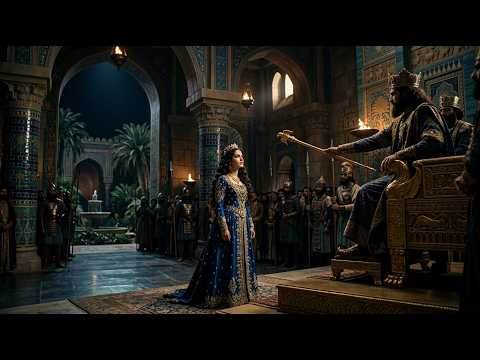
1N'aquella mesma noite fugiu o somno do rei: então mandou trazer o livro das memorias das chronicas, e se leram diante do rei.

2E achou-se escripto que Mardoqueo tinha dado noticia de Bigthan e de Teres, dois eunuchos do rei, dos da guarda da porta, que procuraram pôr as mãos no rei Assuero.

3Então disse o rei: Que honra e magnificencia se fez por isto a Mardoqueo? E os mancebos do rei, seus servos, disseram: Coisa nenhuma se lhe fez.

4Então disse o rei: Quem está no pateo? E Haman tinha entrado no pateo exterior do rei, para dizer ao rei que enforcassem a Mardoqueo na forca que lhe tinha preparado.

5E os mancebos do rei lhe disseram: Eis que Haman está no pateo. E disse o rei que entrasse.

6E, entrando Haman, o rei lhe disse: Que se fará ao homem de cuja honra o rei se agrada? Então Haman disse no seu coração: De quem se agradará o rei para lhe fazer honra mais do que a mim?

7Pelo que disse Haman ao rei: O homem de cuja honra o rei se agrada,

8Traga o vestido real de que o rei se costuma vestir, como tambem o cavallo em que o rei costuma andar montado, e ponha-se-lhe a corôa real na sua cabeça;

9E entregue-se o vestido e o cavallo, á mão d'um dos principes do rei, dos maiores senhores, e vistam d'elle aquelle homem de cuja honra se agrada: e levem-n'o a cavallo pelas ruas da cidade, e apregôe-se diante d'elle: Assim se fará ao homem de cuja honra o rei se agrada!

10Então disse o rei a Haman: Apressa-te, toma o vestido e o cavallo, como disseste, e faze assim para com o judeo Mardoqueo, que está assentado á porta do rei; e coisa nenhuma deixes cair de tudo quanto disseste.

11E Haman tomou o vestido e o cavallo, e vestiu a Mardoqueo, e o levou a cavallo pelas ruas da cidade, e apregoou diante d'elle: Assim se fará ao homem de cuja honra o rei se agrada!

12Depois d'isto Mardoqueo voltou para a porta do rei: porém Haman se retirou correndo a sua casa, anojado, e coberta a cabeça.

13E contou Haman a Zeres, sua mulher, e a todos os seus amigos, tudo quanto lhe tinha succedido. Então os seus sabios, e Zeres, sua mulher, lhe disseram: Se Mardoqueo, diante de quem já começaste a cair, é da semente dos judeos, não prevalecerás contra elle, antes certamente cairás perante elle.

14Estando elles ainda fallando com elle, chegaram os eunuchos do rei, e se apressaram a levar Haman ao banquete que Esther preparara.
📖 Chapter study

Summary

On a sleepless night, the king has the records of the kingdom read to him and discovers that he never rewarded Mordecai for reporting a plot against his life. Ironically, it is Haman himself who ends up being forced to publicly honor his enemy.

Explanation

This chapter is one of the most remarkable examples of dramatic irony in the entire Bible. On the very night before the day Haman planned to ask for Mordecai's death on the newly built gallows, the king is unable to sleep and, by chance, rediscovers Mordecai's forgotten act of loyalty. When he asks Haman how to honor 'the man whom the king delights to honor,' Haman assumes, out of vanity, that he himself is meant, and suggests an extravagant honor—which ends up being applied, to his total humiliation, to Mordecai himself. Even with no explicit mention of God, the sequence of 'coincidences' in this chapter is the heart of the book's theological message: divine providence working silently through the details of everyday life.

Fun facts

  • The 'book of the chronicles' the king has read to him were detailed official records kept by Persian kings, an administrative practice well documented historically in other sources from that empire.
  • The reversal in which Haman is forced to publicly honor Mordecai, his greatest enemy, is considered by literary scholars one of the most perfect examples of dramatic irony in all of ancient literature.

Verse-by-verse explanation

  1. Ester 6:1That night, sleep escapes the king, and he orders the chronicles of the kingdom to be read, thereby rediscovering that Mordecai, some time before, had reported a conspiracy against his life and had never been rewarded for it. It is a coincidence of insomnia that changes the course of the entire story.
  2. Ester 6:2It is precisely in this random reading of the chronicles that the king rediscovers Mordecai’s warning about the conspiracy against his life, recorded back in chapter 2.
  3. Ester 6:3The king realizes Mordecai was never rewarded for saving his life, a forgotten detail that will produce one of the greatest ironies in the book.
  4. Ester 6:4By sheer coincidence of timing, Haman is arriving at the palace at that very moment, ready to ask for Mordecai’s execution.
  5. Ester 6:5The king calls Haman in, unaware that the real reason for his visit was to request the death of the very man the king wanted to honor.
  6. Ester 6:6Haman, with no idea the king was thinking of Mordecai, vainly assumes the question could only be about himself.
  7. Ester 6:7Driven by this proud assumption, Haman begins to describe the most extravagant honor he can imagine, unknowingly meant for himself.
  8. Ester 6:8Haman suggests an almost royal honor: wearing the king’s own robes, riding the king’s own horse, and even wearing a symbol of the crown, all the while thinking of himself.
  9. Ester 6:9He even proposes that one of the most important princes lead the horse through the streets, publicly proclaiming the honor, imagining, of course, that he himself would be the one honored.
  10. Ester 6:10The king’s answer is the most ironic shock in the book: he orders Haman to do exactly all of that, but for Mordecai, the very man he had just been planning to hang.
  11. Ester 6:11Thinking the honor the king wanted to grant was for himself, Haman ends up having to dress Mordecai in the royal robes and lead him on horseback through the streets, proclaiming his honor aloud. It is an ironic twist: Haman himself becomes the instrument for glorifying the very man he wanted dead.
  12. Ester 6:12After parading Mordecai through the streets as ordered, Haman returns home humiliated, covering his head, a traditional gesture of shame and mourning.
  13. Ester 6:13This time even Haman’s wife and friends admit that his luck is turning, predicting he will not be able to defeat Mordecai because Mordecai is a Jew.
  14. Ester 6:14In the middle of this discouraging conversation, the king’s chamberlains already arrive to fetch Haman, giving him no time to fully process what his friends had just said.

Watch the story of this passage

Videos from our channel that tell what happens in Esther 6.

Chapters

Our apps

Our apps →

Bible in Stories

The Bible told as a story, with audio and videos.

📱 Get the app

World in Stories

True stories of humanity that sound made up.

Feito! Pequenas Vitórias

A light daily routine for people who lose track of the day.