Ester 2

ARC · Chapter 2/10

1Passadas estas coisas, e apaziguado já o furor do rei Assuero, lembrou-se de Vasthi, e do que fizera, e do que se tinha decretado a seu respeito.

2Então disseram os mancebos do rei, que lhe serviam: Busquem-se para o rei moças virgens, formosas á vista.

3E ponha o rei commissarios em todas as provincias do seu reino, que ajuntem a todas as moças virgens, formosas á vista, na fortaleza de Susan, na casa das mulheres, debaixo da mão d'Hegai, eunucho do rei, guarda das mulheres, e dêem-se-lhes os seus enfeites.

4E a moça que parecer bem aos olhos do rei, reine em logar de Vasthi. E isto pareceu bem aos olhos do rei, e assim fez.

5Havia então um homem judeo na fortaleza de Susan, cujo nome era Mardoqueo, filho de Jair, filho de Simei, filho de Kis, homem benjamita,

6Que fôra transportado de Jerusalem, com os transportados que foram transportados com Jechonias, rei de Judah, o qual transportara Nabucodonosor, rei de Babylonia.

7Este criara a Hadassa (que é Esther, filha de seu tio), porque não tinha pae nem mãe: e era moça bella de parecer, e formosa á vista; e, morrendo seu pae e sua mãe, Mardoqueo a tomara por sua filha

8Succedeu pois que, divulgando-se o mandado do rei e a sua lei, e ajuntando-se muitas moças na fortaleza de Susan, debaixo da mão d'Hegai, tambem levaram Esther á casa do rei, debaixo da mão d'Hegai, guarda das mulheres.

9E a moça pareceu formosa aos seus olhos, e alcançou graça perante elle; pelo que se apressurou com os seus enfeites, e em lhe dar os seus quinhões, como tambem em lhe dar sete moças de respeito da casa do rei: e a fez passar com as suas moças ao melhor logar da casa das mulheres.

10Esther porém não declarou o seu povo e a sua parentela; porque Mardoqueo lhe tinha ordenado que o não declarasse.

11E passeava Mardoqueo cada dia diante do pateo da casa das mulheres, para se informar de como Esther passava, e do que lhe succederia.

12E, chegando já a vez de cada moça, para vir ao rei Assuero, depois que fôra feito a ella segundo a lei das mulheres, por doze mezes (porque assim se cumpriam os dias das suas purificações), seis mezes com oleo de myrrha, e seis mezes com especiarias, e com as coisas para a purificação das mulheres:

13D'esta maneira pois entrava a moça ao rei: tudo quanto ella dizia se lhe dava, para se ir com aquillo da casa das mulheres á casa do rei:

14Á tarde entrava, e pela manhã tornava á segunda casa das mulheres, debaixo da mão de Saasgaz, eunucho do rei, guarda das concubinas: não tornava mais ao rei, salvo se o rei a desejasse, e fosse chamada por nome

15Chegando pois a vez d'Esther, filha d'Abihail, tio de Mardoqueo (que a tomara por sua filha), para ir ao rei, coisa nenhuma pediu, senão o que disse Hegai, eunucho do rei, guarda das mulheres: e alcançava Esther graça aos olhos de todos quantos a viam.

16Assim foi levada Esther ao rei Assuero, á sua casa real, no decimo mez, que é o mez de tebeth, no setimo anno do seu reinado.

17E o rei amou a Esther mais do que a todas as mulheres, e alcançou perante elle graça e benevolencia mais do que todas as virgens: e poz a corôa real na sua cabeça, e a fez rainha em logar de Vasthi.

18Então o rei fez um grande convite a todos os seus principes e aos seus servos, que era o convite d'Esther: e deu repouso ás provincias, e fez presentes segundo o estado do rei.

19E ajuntando-se segunda vez as virgens, Mardoqueo estava assentado á porta do rei.

20Esther porém não declarava a sua parentela e o seu povo, como Mardoqueo lhe ordenara: porque Esther fazia o mandado de Mardoqueo, como quando a criara.

21N'aquelles dias, assentando-se Mardoqueo á porta do rei, dois eunuchos do rei, dos guardas da porta, Bigthan e Theres, grandemente se indignaram, e procuraram pôr as mãos no rei Assuero.

22E veiu isto ao conhecimento de Mardoqueo, e elle fez saber á rainha Esther, e Esther o disse ao rei, em nome de Mardoqueo.

23E inquiriu-se o negocio, e se descobriu, e ambos foram enforcados n'uma forca: e foi escripto nas chronicas perante o rei.
📖 Chapter study

Summary

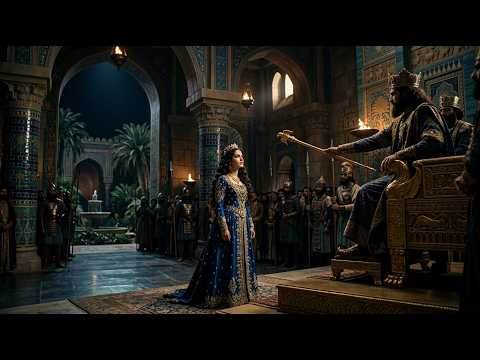
After Vashti's removal, a search is organized throughout the empire to find a new queen among the most beautiful young women. Esther, a young Jewish orphan raised by her cousin Mordecai, is chosen and becomes queen without revealing her Jewish background.

Explanation

Esther enters the palace through a process that would be seen today as deeply troubling—young women forcibly brought into a beauty contest that, in practice, ended with a single night with the king, with no choice of their own. It's important to read this chapter while acknowledging the harsh reality faced by women in ancient empires, without romanticizing the situation. Even so, within these difficult circumstances, Esther finds favor with those around her and, on Mordecai's advice, keeps her identity secret—a secret that will become crucial later on. The chapter also plants an important seed: Mordecai uncovers a plot against the king and reports it, an act of loyalty that will be remembered much later.

Fun facts

  • The name Esther likely comes from the Persian goddess Ishtar, while her Hebrew name, Hadassah, means 'myrtle,' an aromatic plant—a detail that shows how she lived with two identities, one public and one hidden.
  • The preparation process for the candidates lasted a full twelve months, with six months of treatment with oil of myrrh and another six with perfumes, revealing the extreme luxury and ritual of the Persian court.

Verse-by-verse explanation

  1. Ester 2:1Some time later, the anger of the moment having faded, the king seems to miss Vashti, but the decree he himself had signed could no longer be undone.
  2. Ester 2:2The king’s own advisers suggest a practical solution: organize a search for beautiful young women throughout the empire to choose a new queen.
  3. Ester 2:3Officers are sent throughout the empire to gather young virgins at the fortress of Shushan, under the care of a eunuch in charge of the king’s harem. It is through this official roundup of young women that Esther arrives at the palace, without having chosen it herself.
  4. Ester 2:4The king accepts the proposal without hesitation, starting a selection process that will, unnoticed by anyone yet, bring a young Jewish woman into the palace.
  5. Ester 2:5Mordecai is introduced with a genealogy tracing back to the tribe of Benjamin, the same tribe as King Saul, a detail that gains weight later, since the enemy Haman is described as an Agagite, linked to the people of Amalek, an ancient rival of the Benjamites.
  6. Ester 2:6Mordecai, or at least his family, had been carried into exile decades earlier, together with Jeconiah king of Judah, the same Babylonian exile background that already appears in Ezra and Nehemiah.
  7. Ester 2:7Esther is orphaned of both father and mother and was raised by her cousin Mordecai, who adopted her as his own daughter. The text makes this bond of kinship and care clear before explaining how she ends up among the candidates for queen.
  8. Ester 2:8Esther is brought to the palace as part of a mass official summons, with no choice of her own in the process; she is simply one of the many young women gathered by royal order.
  9. Ester 2:9Hegai, in charge of the harem, shows favor toward Esther from the start, giving her special treatment and seven maidens just for her.
  10. Ester 2:10By Mordecai’s order, Esther hides her Jewish identity inside the palace, a secret that will become crucial later in the story.
  11. Ester 2:11Even without being able to speak to her directly, Mordecai checks on Esther every day, showing how much he kept caring for her even from a distance.
  12. Ester 2:12Before any young woman could appear before the king, she went through twelve months of preparation, six with oil of myrrh and six with other spices, a long beautification process carefully regulated by the royal household.
  13. Ester 2:13Each young woman could choose whatever she wanted to take with her on the night she was presented to the king, a detail that makes Esther’s simple choice in the next verse even more striking.
  14. Ester 2:14After a single night, each young woman went to a second part of the harem, reserved for concubines, and would only see the king again if he specifically asked for her by name.
  15. Ester 2:15Unlike the other young women, Esther asks for nothing beyond what Hegai suggests, a simplicity that seems to have won over both the eunuch and, shortly after, the king himself.
  16. Ester 2:16Esther is finally brought before the king four years after the banquet that had dethroned Vashti, a selection process that took a long time.
  17. Ester 2:17Among all the candidates gathered over the years, it is Esther who wins the king’s heart and receives the crown, becoming the new queen of Persia.
  18. Ester 2:18The king celebrates Esther’s coronation with a great feast and even grants some kind of relief from taxes or military service to the provinces, a gesture of generosity in honor of the new queen.
  19. Ester 2:19Mordecai already holds a fixed position as an official at the king’s gate, which will give him access to important information in the very next verse.
  20. Ester 2:20Even as queen now, Esther keeps hiding her Jewish origin, obeying Mordecai just as she had done since childhood.
  21. Ester 2:21Two of the king’s own chamberlains plot to assassinate the king, and it is precisely because of Mordecai’s position at the gate that he discovers the conspiracy.
  22. Ester 2:22Mordecai discovers a conspiracy by two eunuchs against the king’s life and tells Esther, who in turn tells the king himself, giving Mordecai the credit. This warning, recorded in the chronicles of the kingdom, will become centrally important much later in the plot.
  23. Ester 2:23The two conspirators are executed, and Mordecai’s warning is officially recorded in the chronicles of the kingdom, a record that seems forgotten but will prove decisive back in chapter 6.

Watch the story of this passage

Videos from our channel that tell what happens in Esther 2.

Chapters

Our apps

Our apps →

Bible in Stories

The Bible told as a story, with audio and videos.

📱 Get the app

World in Stories

True stories of humanity that sound made up.

Feito! Pequenas Vitórias

A light daily routine for people who lose track of the day.