Esther 6

KJV · Chapter 6/10

1On that night could not the king sleep, and he commanded to bring the book of records of the chronicles; and they were read before the king.

2And it was found written, that Mordecai had told of Bigthana and Teresh, two of the king’s chamberlains, the keepers of the door, who sought to lay hand on the king Ahasuerus.

3And the king said, What honour and dignity hath been done to Mordecai for this? Then said the king’s servants that ministered unto him, There is nothing done for him.

4And the king said, Who is in the court? Now Haman was come into the outward court of the king’s house, to speak unto the king to hang Mordecai on the gallows that he had prepared for him.

5And the king’s servants said unto him, Behold, Haman standeth in the court. And the king said, Let him come in.

6So Haman came in. And the king said unto him, What shall be done unto the man whom the king delighteth to honour? Now Haman thought in his heart, To whom would the king delight to do honour more than to myself?

7And Haman answered the king, For the man whom the king delighteth to honour,

8Let the royal apparel be brought which the king useth to wear, and the horse that the king rideth upon, and the crown royal which is set upon his head:

9And let this apparel and horse be delivered to the hand of one of the king’s most noble princes, that they may array the man withal whom the king delighteth to honour, and bring him on horseback through the street of the city, and proclaim before him, Thus shall it be done to the man whom the king delighteth to honour.

10Then the king said to Haman, Make haste, and take the apparel and the horse, as thou hast said, and do even so to Mordecai the Jew, that sitteth at the king’s gate: let nothing fail of all that thou hast spoken.

11Then took Haman the apparel and the horse, and arrayed Mordecai, and brought him on horseback through the street of the city, and proclaimed before him, Thus shall it be done unto the man whom the king delighteth to honour.

12And Mordecai came again to the king’s gate. But Haman hasted to his house mourning, and having his head covered.

13And Haman told Zeresh his wife and all his friends every thing that had befallen him. Then said his wise men and Zeresh his wife unto him, If Mordecai be of the seed of the Jews, before whom thou hast begun to fall, thou shalt not prevail against him, but shalt surely fall before him.

14And while they were yet talking with him, came the king’s chamberlains, and hasted to bring Haman unto the banquet that Esther had prepared.
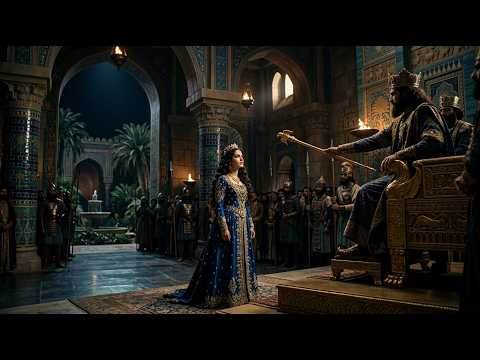
📖 Chapter study

Summary

On a sleepless night, the king has the records of the kingdom read to him and discovers that he never rewarded Mordecai for reporting a plot against his life. Ironically, it is Haman himself who ends up being forced to publicly honor his enemy.

Explanation

This chapter is one of the most remarkable examples of dramatic irony in the entire Bible. On the very night before the day Haman planned to ask for Mordecai's death on the newly built gallows, the king is unable to sleep and, by chance, rediscovers Mordecai's forgotten act of loyalty. When he asks Haman how to honor 'the man whom the king delights to honor,' Haman assumes, out of vanity, that he himself is meant, and suggests an extravagant honor—which ends up being applied, to his total humiliation, to Mordecai himself. Even with no explicit mention of God, the sequence of 'coincidences' in this chapter is the heart of the book's theological message: divine providence working silently through the details of everyday life.

Fun facts

  • The 'book of the chronicles' the king has read to him were detailed official records kept by Persian kings, an administrative practice well documented historically in other sources from that empire.
  • The reversal in which Haman is forced to publicly honor Mordecai, his greatest enemy, is considered by literary scholars one of the most perfect examples of dramatic irony in all of ancient literature.

Verse-by-verse explanation

  1. Esther 6:1That night, sleep escapes the king, and he orders the chronicles of the kingdom to be read, thereby rediscovering that Mordecai, some time before, had reported a conspiracy against his life and had never been rewarded for it. It is a coincidence of insomnia that changes the course of the entire story.
  2. Esther 6:2It is precisely in this random reading of the chronicles that the king rediscovers Mordecai’s warning about the conspiracy against his life, recorded back in chapter 2.
  3. Esther 6:3The king realizes Mordecai was never rewarded for saving his life, a forgotten detail that will produce one of the greatest ironies in the book.
  4. Esther 6:4By sheer coincidence of timing, Haman is arriving at the palace at that very moment, ready to ask for Mordecai’s execution.
  5. Esther 6:5The king calls Haman in, unaware that the real reason for his visit was to request the death of the very man the king wanted to honor.
  6. Esther 6:6Haman, with no idea the king was thinking of Mordecai, vainly assumes the question could only be about himself.
  7. Esther 6:7Driven by this proud assumption, Haman begins to describe the most extravagant honor he can imagine, unknowingly meant for himself.
  8. Esther 6:8Haman suggests an almost royal honor: wearing the king’s own robes, riding the king’s own horse, and even wearing a symbol of the crown, all the while thinking of himself.
  9. Esther 6:9He even proposes that one of the most important princes lead the horse through the streets, publicly proclaiming the honor, imagining, of course, that he himself would be the one honored.
  10. Esther 6:10The king’s answer is the most ironic shock in the book: he orders Haman to do exactly all of that, but for Mordecai, the very man he had just been planning to hang.
  11. Esther 6:11Thinking the honor the king wanted to grant was for himself, Haman ends up having to dress Mordecai in the royal robes and lead him on horseback through the streets, proclaiming his honor aloud. It is an ironic twist: Haman himself becomes the instrument for glorifying the very man he wanted dead.
  12. Esther 6:12After parading Mordecai through the streets as ordered, Haman returns home humiliated, covering his head, a traditional gesture of shame and mourning.
  13. Esther 6:13This time even Haman’s wife and friends admit that his luck is turning, predicting he will not be able to defeat Mordecai because Mordecai is a Jew.
  14. Esther 6:14In the middle of this discouraging conversation, the king’s chamberlains already arrive to fetch Haman, giving him no time to fully process what his friends had just said.

Watch the story of this passage

Videos from our channel that tell what happens in Esther 6.

Chapters

Our apps

Our apps →

Bible in Stories

The Bible told as a story, with audio and videos.

📱 Get the app

World in Stories

True stories of humanity that sound made up.

Feito! Pequenas Vitórias

A light daily routine for people who lose track of the day.