Genesis 6

KJV · Chapter 6/50

1And it came to pass, when men began to multiply on the face of the earth, and daughters were born unto them,

2That the sons of God saw the daughters of men that they were fair; and they took them wives of all which they chose.

3And the Lord said, My spirit shall not always strive with man, for that he also is flesh: yet his days shall be an hundred and twenty years.

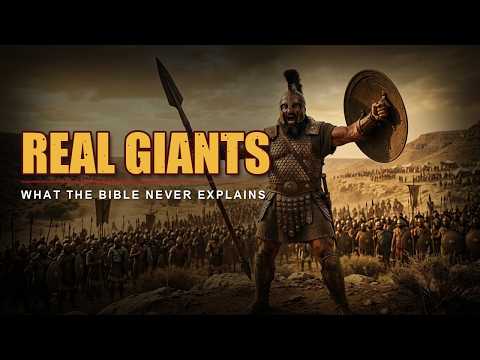
4There were giants in the earth in those days; and also after that, when the sons of God came in unto the daughters of men, and they bare children to them, the same became mighty men which were of old, men of renown.

5And God saw that the wickedness of man was great in the earth, and that every imagination of the thoughts of his heart was only evil continually.

6And it repented the Lord that he had made man on the earth, and it grieved him at his heart.

7And the Lord said, I will destroy man whom I have created from the face of the earth; both man, and beast, and the creeping thing, and the fowls of the air; for it repenteth me that I have made them.

8But Noah found grace in the eyes of the Lord.

9These are the generations of Noah: Noah was a just man and perfect in his generations, and Noah walked with God.

10And Noah begat three sons, Shem, Ham, and Japheth.

11The earth also was corrupt before God, and the earth was filled with violence.

12And God looked upon the earth, and, behold, it was corrupt; for all flesh had corrupted his way upon the earth.

13And God said unto Noah, The end of all flesh is come before me; for the earth is filled with violence through them; and, behold, I will destroy them with the earth.

14Make thee an ark of gopher wood; rooms shalt thou make in the ark, and shalt pitch it within and without with pitch.

15And this is the fashion which thou shalt make it of: The length of the ark shall be three hundred cubits, the breadth of it fifty cubits, and the height of it thirty cubits.

16A window shalt thou make to the ark, and in a cubit shalt thou finish it above; and the door of the ark shalt thou set in the side thereof; with lower, second, and third stories shalt thou make it.

17And, behold, I, even I, do bring a flood of waters upon the earth, to destroy all flesh, wherein is the breath of life, from under heaven; and every thing that is in the earth shall die.

18But with thee will I establish my covenant; and thou shalt come into the ark, thou, and thy sons, and thy wife, and thy sons’ wives with thee.

19And of every living thing of all flesh, two of every sort shalt thou bring into the ark, to keep them alive with thee; they shall be male and female.

20Of fowls after their kind, and of cattle after their kind, of every creeping thing of the earth after his kind, two of every sort shall come unto thee, to keep them alive.

21And take thou unto thee of all food that is eaten, and thou shalt gather it to thee; and it shall be for food for thee, and for them.

22Thus did Noah; according to all that God commanded him, so did he.
📖 Chapter study

Summary

Human wickedness multiplies on the earth, grieving God, who decides to destroy humanity with a flood, but chooses Noah, a righteous man, to build an ark and save his family and the animals.

Explanation

This chapter marks a dramatic turning point: violence and corruption have taken over the earth to the point that God 'repents' of having made humankind — an expression describing God's deep sorrow over evil, not an arbitrary change of plan. Amid this dark scene, Noah stands out as someone who 'walked with God,' echoing the phrase used for Enoch. The detailed instructions for building the ark (measurements, material, compartments) show that salvation required practical, patient obedience, not merely abstract faith. The ark becomes a symbol of refuge in the midst of judgment. Today's lesson is that even when the surrounding world seems corrupt, an upright life can be an instrument of salvation for many.

Fun facts

  • The ark's dimensions (300 x 50 x 30 cubits, about 135m x 22m x 13m) result in a length-to-width ratio very close to that used in modern cargo ships, which naval engineers note as surprisingly stable for flotation.
  • The expression 'sons of God' and 'giants' (nephilim) in verse 4 is one of the most debated texts among biblical scholars to this day, with no definitive consensus on their exact identity — but the chapter's central point, humanity's growing violence, is clear.

Verse-by-verse explanation

  1. Genesis 6:1Humanity grows in number, and it’s against this backdrop of multiplying that the strange scene in the next verse — the ‘sons of God’ and the ‘daughters of men’ — takes place.
  2. Genesis 6:2The identity of the ‘sons of God’ who marry the ‘daughters of men’ is one of the most debated questions in the Old Testament, and there’s no single answer. The most common readings are: heavenly beings, a kind of angels; the line of Seth, described as closer to God, mixing with the line of Cain; or perhaps powerful kings and nobles of the time. The text doesn’t explain, it just describes the fact.
  3. Genesis 6:3The number ‘an hundred and twenty years’ also has more than one possible reading. It could be a new limit on the length of human life going forward — which doesn’t quite match the much longer ages recorded right after this — or it could be a countdown to the flood, giving people time to change their ways before the rain arrived.
  4. Genesis 6:4The word translated here as ‘giants’ is nefilim in the original Hebrew, and no one knows for certain the exact origin of the term or who these figures were. The text only calls them mighty men ‘of old, men of renown,’ mentioned in passing with no further explanation. It’s one of the most obscure points in the whole book of Genesis.
  5. Genesis 6:5After the episode in verses 1 through 4, the text widens the picture: it isn’t just one specific group behaving badly, it’s all of humanity, with evil thoughts all the time. It’s this state of affairs that leads to the decision to send the flood.
  6. Genesis 6:6Describing God as ‘repenting’ and grieving is a human way of expressing a change of course in the face of widespread wickedness — the text uses human emotion to convey the seriousness of the decision that follows.
  7. Genesis 6:7God decides to destroy not only human beings but also animals, creeping things, and birds — the corruption described in the previous verse is treated as something affecting all life on earth, not just people.
  8. Genesis 6:8In the middle of the announcement of total destruction, one single person is spared: Noah. It’s this exception that opens up the rest of the story told in the chapters that follow.
  9. Genesis 6:9The text describes Noah as ‘a just man and perfect’ and someone who ‘walked with God’ — the same expression used for Enoch in the previous chapter, marking Noah as part of a line set apart from the rest of corrupted humanity.
  10. Genesis 6:10This confirms the three sons of Noah already named at the end of the previous chapter: Shem, Ham, and Japheth — the only ones, along with their wives, who will survive the flood inside the ark.
  11. Genesis 6:11This repeats and reinforces the description of widespread evil: the earth is corrupt and full of violence, the two reasons the text gives to justify the judgment that is coming.
  12. Genesis 6:12God Himself confirms what the narrator had already said: all of humanity had corrupted its way. Repeating the idea in different forms drives home just how badly the situation had gotten.
  13. Genesis 6:13God announces directly to Noah His plan to destroy all life because of the violence spread across the earth — it’s the first time He speaks to Noah in this story, opening the instructions for the ark.
  14. Genesis 6:14God gives Noah the first practical instruction: build an ark of ‘gopher wood,’ divided into rooms and covered with pitch inside and out so no water can get in.
  15. Genesis 6:15A ‘cubit’ was an ancient unit of measure based on the length of the arm, from the elbow to the fingertip — about 18 inches. That means the ark was roughly 440 feet long, 75 feet wide, and 45 feet high: an enormous vessel by the standards of the time. It was measured the way people measured everything before the meter existed.
  16. Genesis 6:16This adds more construction details: a window near the top, a door in the side, and ‘lower, second, and third stories’ — the ark was, in practice, a huge cargo ship with several levels.
  17. Genesis 6:17God explains the reason for the whole construction: He is going to send a ‘flood’ that will destroy all life that breathes under heaven. It’s the first time the word ‘flood’ appears, explaining what the ark is for.
  18. Genesis 6:18In the middle of announcing destruction, God promises a ‘covenant’ with Noah — he and his entire family, wives included, will enter the ark and survive. It’s the first time the word ‘covenant’ appears in the Bible.
  19. Genesis 6:19God tells Noah to bring a pair of every kind of animal into the ark, male and female, ensuring that animal life continues after the flood.
  20. Genesis 6:20The instruction breaks it down by category — birds, animals, and creeping things — but repeats the same rule: a pair of each kind, enough to restart life once the water goes down.
  21. Genesis 6:21Besides the animals, Noah also needs to gather enough food to feed his family and all the creatures during the time they will spend inside the ark.
  22. Genesis 6:22This closes the chapter with a simple line that sums up Noah’s response: he did exactly everything God commanded, without straying from the instruction.

Watch the story of this passage

Videos from our channel that tell what happens in Genesis 6.

Chapters

Our apps

Our apps →

Bible in Stories

The Bible told as a story, with audio and videos.

📱 Get the app

World in Stories

True stories of humanity that sound made up.

Feito! Pequenas Vitórias

A light daily routine for people who lose track of the day.