1 Reis 3

BLIVRE · Chapter 3/22

1E Salomão fez parentesco com Faraó, rei do Egito, porque se casou com a filha de Faraó, e a trouxe à cidade de Davi, até que acabasse de edificar a sua própria casa, e a casa do SENHOR, e os muros de Jerusalém em redor.

2Todavia o povo sacrificava nos altares dos lugares altos, porque não havia casa edificada ao nome do SENHOR até aqueles tempos.

3Mas Salomão amava ao SENHOR, andando nos estatutos de seu pai Davi, exceto que sacrificava e queimava incenso nos altares dos lugares altos.

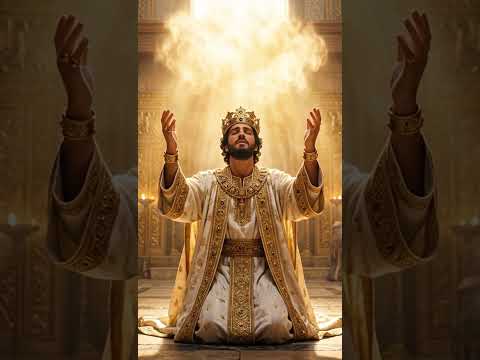
4E o rei foi a Gibeão, porque aquele era o principal lugar alto, e Salomão sacrificou ali mil holocaustos sobre aquele altar.

5Em uma noite, o SENHOR apareceu a Salomão em sonhos. E Deus lhe disse: Pede o que [queres que] eu te dê.

6E Salomão disse: Tu concedeste grande misericórdia a teu servo Davi, meu pai, como também ele andou perante ti em verdade, em justiça, e com um coração correto para contigo; e guardaste-lhe este teu grande benefício, que lhe deste um filho que se assentasse no seu trono, como acontece hoje.

7Agora, pois, ó SENHOR meu Deus, constituíste a mim, teu servo, rei em lugar de Davi, meu pai; porém sou um tenro jovem, que não sei como entrar nem sair.

8E teu servo está no meio do teu povo que escolheste; um povo grande, que não se pode contar nem numerar por causa de sua multidão.

9Dá, pois, a teu servo um coração com entendimento para julgar ao teu povo, para discernir entre o bem e o mal; pois quem poderá governar este teu tão grande povo?

10E foi do agrado do Senhor que Salomão pedisse isso.

11Deus disse-lhe: Porque pediste isto, e não pediste para ti longa vida, nem pediste para ti riquezas, nem pediste a morte de teus inimigos, mas pediste para ti entendimento para compreender a justiça;

12Eis que o fiz conforme as tuas palavras: eis que te dei um coração sábio e com entendimento, tanto que não houve antes de ti outro como tu, nem depois de ti se levantará outro como tu.

13E também te dei as coisas que não pediste: riquezas e honra; de maneira que, entre os reis, ninguém haverá semelhante a ti em todos os teus dias.

14E se andares em meus caminhos, guardando meus estatutos e meus mandamentos, como andou Davi, teu pai, prolongarei teus dias.

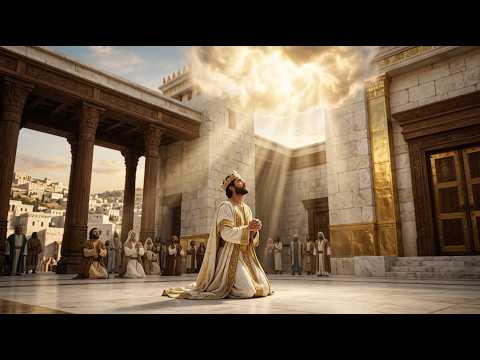
15E quando Salomão despertou, viu que era sonho: e veio a Jerusalém, e apresentou-se diante da arca do pacto do SENHOR, e sacrificou holocaustos, e fez ofertas pacíficas; fez também banquete a todos seus servos.

16Naquela muita vieram duas mulheres prostitutas ao rei, e apresentaram-se diante dele.

17E disse a uma mulher: Ah, senhor meu! Eu e esta mulher morávamos em uma mesma casa, e eu pari estando com ela na casa.

18E aconteceu ao terceiro dia depois que eu dei à luz, que esta deu à luz também, e morávamos nós juntas; ninguém de fora estava em casa, a não ser nós duas na casa.

19E uma noite o filho desta mulher morreu, porque ela se deitou sobre ele.

20E levantou-se à meia noite, e tomou a meu filho de junto a mim, estando eu tua serva dormindo, e o pôs a seu lado, e pôs a meu lado seu filho morto.

21E quando eu me levantei pela manhã para dar o peito a meu filho, eis que que estava morto: mas observei-lhe pela manhã, e vi que não era meu filho, que eu havia dado à luz.

22Então a outra mulher disse: Não; meu filho é o que vive, e teu filho é o morto. E a outra voltou a dizer: Não; teu filho é o morto, e meu filho é o que vive. Assim falavam diante do rei.

23O rei então disse: Esta disse: Meu filho é o que vive, e teu filho é o morto: e a outra disse: Não, mas o teu é o morto, e meu filho é o que vive.

24E disse o rei: Trazei-me uma espada. E trouxeram ao rei uma espada.

25Em seguida o rei disse: Parti por meio o menino vivo, e dai a metade à uma, e a outra metade à outra.

26Então a mulher cujo era o filho vivo, falou ao rei (porque suas entranhas se lhe comoveram por seu filho), e disse: Ah, senhor meu! Dai a esta o menino vivo, e não o mateis. Mas a outra disse: nem a mim nem a ti; parti-o.

27Então o rei respondeu, e disse: Dai a aquela o filho vivo, e não o mateis: ela é sua mãe.

28E todo Israel ouviu aquele juízo que havia dado o rei: e temeram ao rei, porque viram que havia nele sabedoria de Deus para julgar.
📖 Chapter study

Summary

Solomon, in a dream at Gibeon, asks God for wisdom to govern rather than wealth or power, and God grants him both wisdom and riches. He then demonstrates this wisdom by judging the case of the two mothers disputing a baby.

Explanation

This is the defining portrait of Solomon's reign: his fame for wisdom is born from a conscious choice to prioritize discernment over personal gain. The judgment of the two women became a universal symbol of wise justice — Solomon had no way of knowing who was lying, but he recognized that true motherly love would reveal itself through willingness to give up the child to save her. The practical lesson is that genuine wisdom often comes from understanding human nature and people's hearts, not just from rules and laws.

Fun facts

  • Gibeon, where Solomon had the dream, was still a 'high place' for sacrifice before the temple was built, a practice tolerated during this transitional period even among kings faithful to God.
  • The phrase 'understanding heart,' used in Solomon's request, is literally 'a hearing heart' in Hebrew — suggesting that biblical wisdom is tied to the ability to listen well before judging.

Verse-by-verse explanation

  1. 1 Reis 3:1Solomon seals a political alliance by marrying Pharaoh’s daughter, king of Egypt, and brings her to Jerusalem while he is still finishing his palace, the Temple, and the city wall.
  2. 1 Reis 3:2The high places were local shrines, built on hills and elevated spots, used for sacrifice before the Temple existed — at this point they were still tolerated, even by kings considered good. Later, once the Temple is finished, continuing to use the high places starts being counted as a failing, even for the most praised kings.
  3. 1 Reis 3:3Solomon loved God and followed in David’s footsteps, but the text notes a qualification: he still offered sacrifices and burned incense at the high places — because the Temple did not exist yet.
  4. 1 Reis 3:4A thousand animals sacrificed in a single session is a figure meant for display, the kind ancient Near Eastern kings used to show off power and devotion at the same time. It is not necessarily an exact count, but a way of saying that Solomon began his reign in grand style.
  5. 1 Reis 3:5At Gibeon, God appears to Solomon at night in a dream, and makes an open offer: “Ask what I shall give thee.”
  6. 1 Reis 3:6Solomon begins by giving thanks: God was kind to David because he walked in faithfulness and righteousness, and because of that gave him a son to sit on the throne, which is happening right now.
  7. 1 Reis 3:7Solomon describes himself as a child who still does not know how “to go out or come in” — a humble way of saying he feels unprepared to govern.
  8. 1 Reis 3:8Solomon notes that he is in the midst of an enormous people, chosen by God, too many even to count.
  9. 1 Reis 3:9Solomon’s request is not for intelligence in general, but for discernment to judge — the most concrete and most demanded function of an ancient king was settling disputes between his subjects. That is exactly what the story of the two mothers, right after this, puts to the test.
  10. 1 Reis 3:10God is pleased with Solomon’s request — not riches, not vengeance, but wisdom to judge well.
  11. 1 Reis 3:11God acknowledges what Solomon did NOT ask for: not long life, not riches, not the death of his enemies — only understanding to do justice.
  12. 1 Reis 3:12God grants exactly what was asked: He gives Solomon a heart so wise and understanding that no one before or after him will ever equal it.
  13. 1 Reis 3:13Besides the wisdom he asked for, God adds wealth and honor as a bonus, promising that no king will ever compare to Solomon as long as he lives.
  14. 1 Reis 3:14The promise comes with a condition: if Solomon walks in God’s ways as David did, he too will have a long life.
  15. 1 Reis 3:15Solomon wakes up and realizes it was a dream; he returns to Jerusalem, stands before the ark, offers sacrifices, and holds a feast for all his servants.
  16. 1 Reis 3:16Two women, prostitutes, come before the king with a dispute to settle — the setting for Solomon’s most famous judgment.
  17. 1 Reis 3:17One of them explains: they live in the same house, and she gave birth while living there with the other woman.
  18. 1 Reis 3:18Three days later the other woman also had a baby; they were alone in the house, with no one else present.
  19. 1 Reis 3:19The other woman’s son died in the night because she lay on top of him by accident.
  20. 1 Reis 3:20She got up in the middle of the night, swapped the dead child for the other woman’s living child while the mother slept — and kept the living one for herself.
  21. 1 Reis 3:21In the morning, when she went to nurse him, the first woman found the child dead; but looking closely in the light of day, she saw that it was not the son she had given birth to.
  22. 1 Reis 3:22The other woman denies everything: she says the living one is her son and the dead one is the other’s — and the two argue in front of the king without reaching an agreement.
  23. 1 Reis 3:23The king sums up the dispute: one says the living child is hers and the dead one is the other’s; the other swears the opposite.
  24. 1 Reis 3:24Solomon asks for a sword to be brought — the first step of the test that will reveal who the real mother is.
  25. 1 Reis 3:25With no documents, tests, or reliable witnesses, the only way to find the true mother was to watch the reaction to the threat of cutting the child in two. Whoever truly loves gives up custody to save the child’s life, and this story becomes a showcase for Solomon’s wisdom right at the start of his reign.
  26. 1 Reis 3:26The true mother, her heart aching for her son, begs that he not be killed and would rather give him to the other woman; but the false one says, “Let it be neither mine nor thine, but divide it.”
  27. 1 Reis 3:27Solomon gives the verdict: give the living child to the woman who pleaded for his life, because that reaction proves she is the true mother.
  28. 1 Reis 3:28All Israel hears about this judgment and comes to fear the king, realizing that there was wisdom from God in him to do justice.

Watch the story of this passage

Videos from our channel that tell what happens in 1 Kings 3.

Chapters

Our apps

Our apps →

Bible in Stories

The Bible told as a story, with audio and videos.

📱 Get the app

World in Stories

True stories of humanity that sound made up.

Feito! Pequenas Vitórias

A light daily routine for people who lose track of the day.