Pentateuch · Genesis · Genesis 11
The Tower of Babel
When pride tried to touch the sky
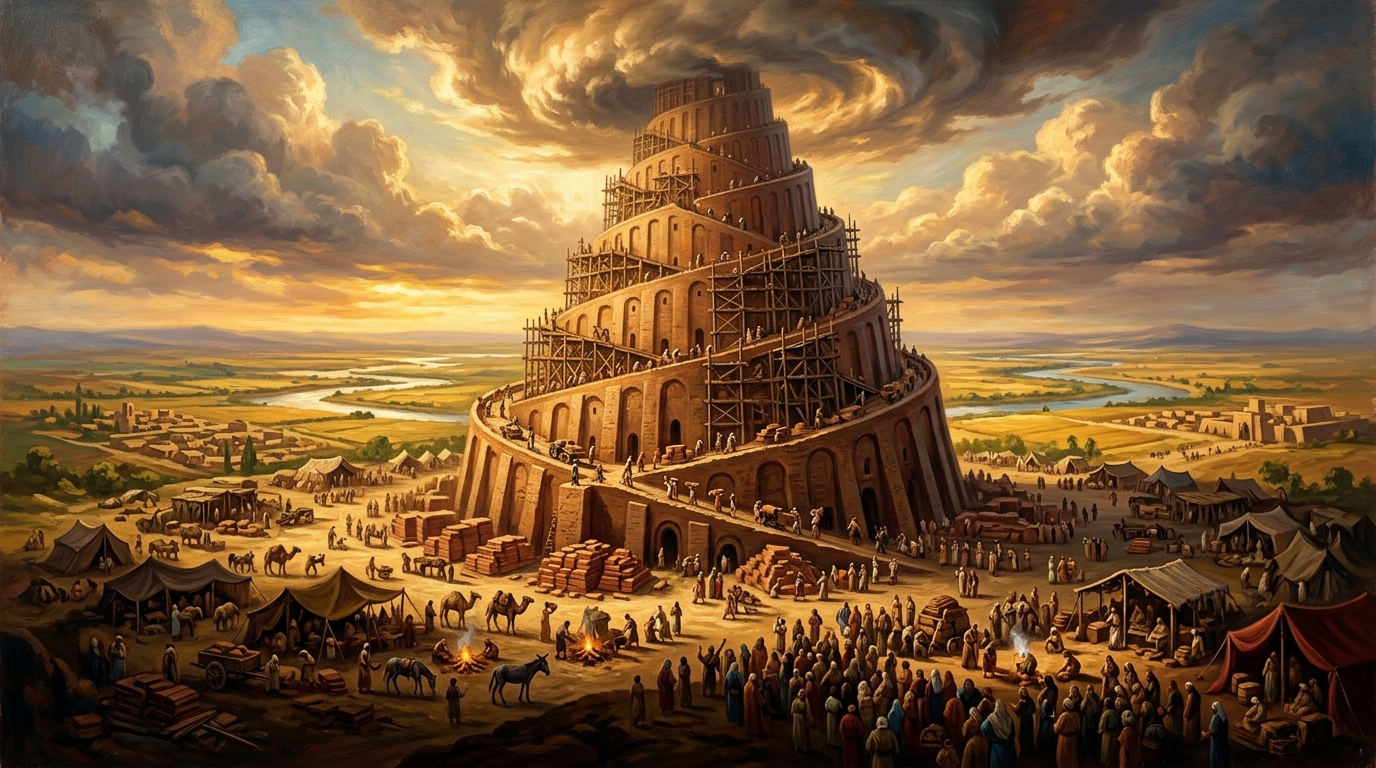
After the flood, Noah's descendants multiplied and all spoke the same language — one speech, one people. Migrating from the east, they found a vast plain in the land of Shinar and settled there, determined never to spread out over the earth again.
They said to one another, "Let us make bricks, and burn them thoroughly" — and brick became their stone, and tar their mortar. Filled with ambition, they resolved to build a city and a tower whose top would reach the heavens, to make a name for themselves. It wasn't just engineering: it was a monument to their own pride, raised so that humanity would no longer need God to stay united.
But the LORD came down to see the city and the tower that the sons of men were building — the work that seemed to touch the sky was still too small to be seen from above without Him drawing near. God saw a people united in language and in purpose, about to turn that strength against their own Creator. So He decided, "Let us go down, and there confound their language, that they may not understand one another's speech."
Overnight, the builders could no longer understand each other. The work stopped, and the LORD scattered them over the face of all the earth — that is why the place was called Babel, because there the LORD confused the language of the whole world. But the story doesn't end in scattering: soon after, from among the dispersed peoples, God calls a man named Abram and makes him a promise — that through his descendants, all the families of the earth would be blessed.
“And they said, Go to, let us build us a city and a tower, whose top may reach unto heaven; and let us make us a name, lest we be scattered abroad upon the face of the whole earth.”
Key verse · Genesis 11:4
💡 Did you know?
- The stepped towers of Mesopotamia, called ziggurats, were massive temples of kiln-fired brick — like the Etemenanki, dedicated to the god Marduk in the city of Babylon. Archaeologists and historians see in these real structures the backdrop behind the tower described in the biblical text.
- In Hebrew, the name "Babel" sounds like the word balal, meaning "to confuse" — a wordplay the sacred text itself explains. In Akkadian, however, the Babylonians called their city Bab-ili, "gate of the god": a name of pride that the Bible turns on its head, making it a byword for confusion instead.
✝️ Connection to Christ
At Babel, men tried to climb to heaven by their own effort and were scattered because of confused language; at Pentecost, the Spirit came down upon the disciples, and people from every nation heard, each in their own language, the wonders of God — the beginning of the gathering of the peoples that Babel had scattered (Acts 2:5-11). What human pride fragmented, the grace of Christ began to reunite.
➜ Practical application
The tower of Babel was born from the desire to "make a name" without depending on God — the same impulse that today drives us to seek recognition, control, and security in our own constructions, whether in career, possessions, or appearance. God is not opposed to human work, but to the pride that dispenses with His presence. In what area of your life have you been trying to touch the sky with your own hands, instead of walking with God?
To reflect
What are you building today for your own name — and what would you build differently if it were for God's glory?
🗺️ Where it happened
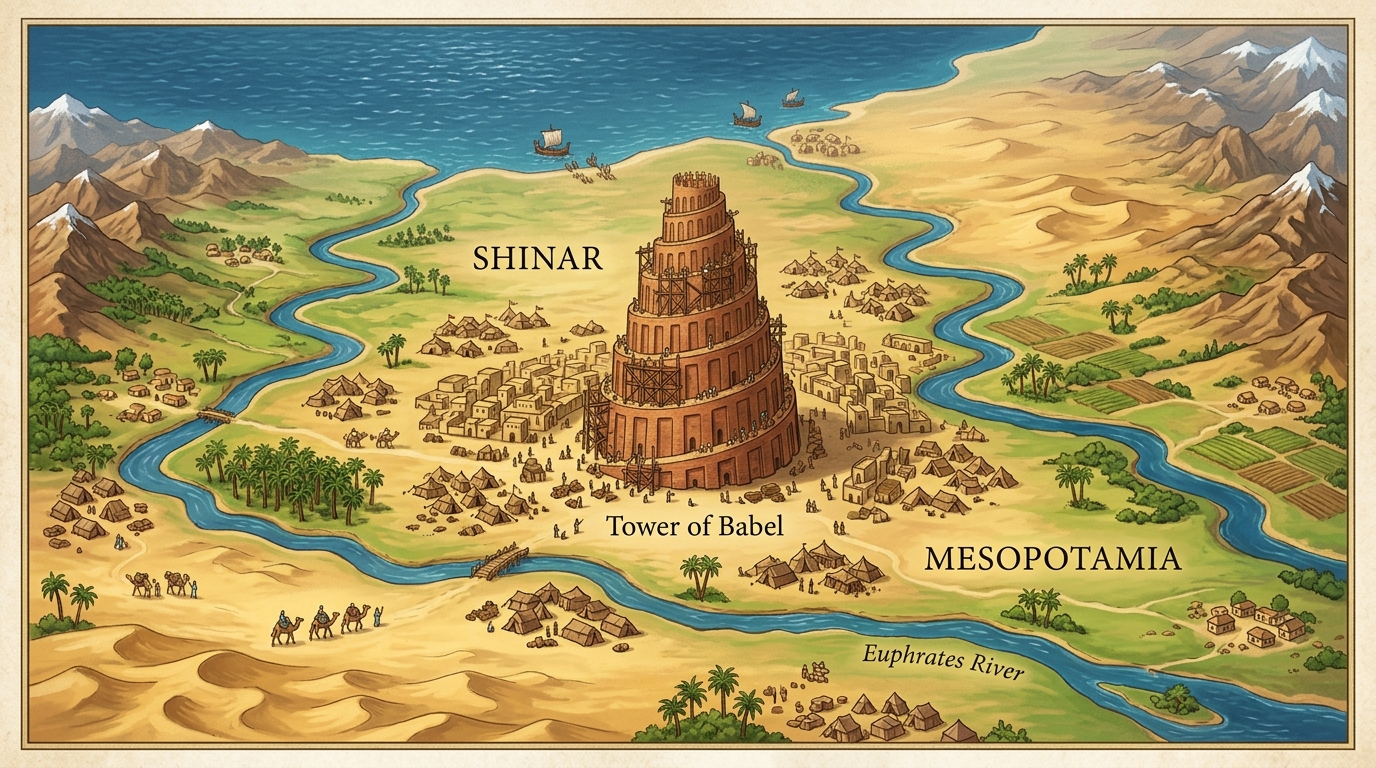
The plain of Shinar, in Mesopotamia, between the Tigris and Euphrates rivers, was the birthplace of humanity's first great tower-city.
Region
Plain of Shinar / Mesopotamia
Period
After the flood
Characters
Noah's descendants
Central theme
Pride and dispersion
📜 Bible timeline
- Creation and the Fall
- The Flood · Noah
- ⭐ Tower of Babel — you are here
- The Patriarchs — ~2000 BC
- Out of Egypt — ~1446 BC
- The Promised Land — ~1406 BC
- United Kingdom — ~1050 BC
- The Prophets — ~760 BC
- Babylon — ~586 BC
- Jesus Christ — ~4 BC
- New Creation
“Therefore is the name of it called Babel; because the Lord did there confound the language of all the earth: and from thence did the Lord scatter them abroad upon the face of all the earth.”
Genesis 11:9
📱 Also in the Bíblia em Histórias app