Jonah 1

KJV · Chapter 1/4

1Now the word of the Lord came unto Jonah the son of Amittai, saying,

2Arise, go to Nineveh, that great city, and cry against it; for their wickedness is come up before me.

3But Jonah rose up to flee unto Tarshish from the presence of the Lord, and went down to Joppa; and he found a ship going to Tarshish: so he paid the fare thereof, and went down into it, to go with them unto Tarshish from the presence of the Lord.

4But the Lord sent out a great wind into the sea, and there was a mighty tempest in the sea, so that the ship was like to be broken.

5Then the mariners were afraid, and cried every man unto his god, and cast forth the wares that were in the ship into the sea, to lighten it of them. But Jonah was gone down into the sides of the ship; and he lay, and was fast asleep.

6So the shipmaster came to him, and said unto him, What meanest thou, O sleeper? arise, call upon thy God, if so be that God will think upon us, that we perish not.

7And they said every one to his fellow, Come, and let us cast lots, that we may know for whose cause this evil is upon us. So they cast lots, and the lot fell upon Jonah.

8Then said they unto him, Tell us, we pray thee, for whose cause this evil is upon us; What is thine occupation? and whence comest thou? what is thy country? and of what people art thou?

9And he said unto them, I am an Hebrew; and I fear the Lord, the God of heaven, which hath made the sea and the dry land.

10Then were the men exceedingly afraid, and said unto him, Why hast thou done this? For the men knew that he fled from the presence of the Lord, because he had told them.

11Then said they unto him, What shall we do unto thee, that the sea may be calm unto us? for the sea wrought, and was tempestuous.

12And he said unto them, Take me up, and cast me forth into the sea; so shall the sea be calm unto you: for I know that for my sake this great tempest is upon you.

13Nevertheless the men rowed hard to bring it to the land; but they could not: for the sea wrought, and was tempestuous against them.

14Wherefore they cried unto the Lord, and said, We beseech thee, O Lord, we beseech thee, let us not perish for this man’s life, and lay not upon us innocent blood: for thou, O Lord, hast done as it pleased thee.

15So they took up Jonah, and cast him forth into the sea: and the sea ceased from her raging.

16Then the men feared the Lord exceedingly, and offered a sacrifice unto the Lord, and made vows.

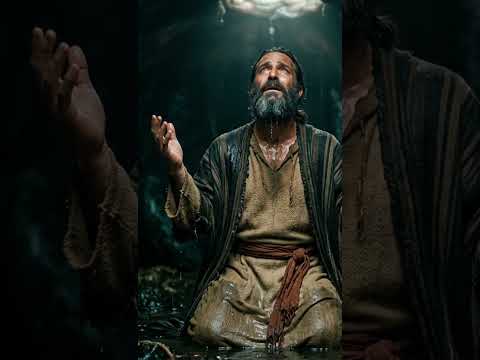
17Now the Lord had prepared a great fish to swallow up Jonah. And Jonah was in the belly of the fish three days and three nights.

📖 Chapter study

Summary

God commands Jonah to preach in Nineveh, but he flees by ship in the opposite direction. A violent storm threatens the ship, and the sailors discover that Jonah is the cause; thrown into the sea, he is swallowed by a great fish.

Explanation

Nineveh was the capital of the Assyrian Empire, Israel's cruel and feared enemy, which explains Jonah's resistance: preaching there meant offering a chance of repentance to a people he saw as deserving nothing but destruction. His flight to Tarshish (likely at the opposite end of the Mediterranean) shows that one can try to flee from a mission, but not from God's active presence. Interestingly, the pagan sailors show more fear of God and more compassion for Jonah than the prophet himself showed toward the Ninevites. The application for today: prejudices and personal grudges can lead us to resist God's will, especially when it involves extending grace to those we consider unworthy of it.

Fun facts

  • Tarshish is generally identified with a Phoenician colony on the coast of modern-day Spain, which would make Jonah's flight an attempt to reach the farthest known point of the ancient world, in the opposite direction from Nineveh (which lay to the east, in Mesopotamia).
  • The Hebrew phrase used for 'great fish' (dag gadol) is generic and does not specify the species — later traditions (including the Greek translation) popularized the idea of a 'whale,' but the original text makes no such specification.

Verse-by-verse explanation

  1. Jonah 1:1The standard opening of the prophetic books: the word of the Lord comes to Jonah, identified by his father's name, even before he knows what the mission will be.
  2. Jonah 1:2Nineveh was the capital of the Assyrian Empire, Israel's greatest enemy at the time — that's why Jonah doesn't want to go: he isn't afraid of the mission, he doesn't want Israel's enemies to get the chance to repent and escape punishment.
  3. Jonah 1:3Tarshish lay at the opposite end of the map from Nineveh, likely on the coast of modern-day Spain; Jonah doesn't just run away, he literally flees in the opposite direction from where God sent him, as far as possible.
  4. Jonah 1:4As soon as Jonah flees, God sends a storm so violent that the ship, his means of escape, is about to break apart — the escape isn't going to work.
  5. Jonah 1:5A striking contrast: the pagan sailors panic and cry out to their own gods, while Jonah, prophet of the true God, sleeps soundly below deck, oblivious to the crisis.
  6. Jonah 1:6After fearing for their lives, the sailors go down to Jonah, who is asleep, and ask him to cry out to his God too, for the safety of everyone.
  7. Jonah 1:7Casting lots was a common method at the time for discovering the divine will or finding someone guilty; the pagan sailors use this practice and end up landing, ironically, on exactly the right person.
  8. Jonah 1:8After the lot falls on Jonah, the sailors bombard him with questions, trying to understand who this man is who brought the storm.
  9. Jonah 1:9Jonah finally identifies himself, ironically claiming that he 'fears' the Lord right after having fled from Him — his words contradict his own actions.
  10. Jonah 1:10On learning that Jonah was fleeing from the very God who controls the sea, the sailors grow even more terrified, realizing how serious the situation is.
  11. Jonah 1:11With the storm getting worse, the sailors ask Jonah, the admitted culprit, what they need to do to save themselves.
  12. Jonah 1:12Jonah takes responsibility and asks to be thrown into the sea, knowing that's the only way the storm will stop — a gesture that sounds almost suicidal.
  13. Jonah 1:13Before agreeing to throw Jonah overboard, the sailors try everything to row back to land, showing they didn't want to kill anyone without cause.
  14. Jonah 1:14Before acting, the pagan sailors cry out to Jonah's God, asking not to be held guilty for his death — a surprising respect for life, even in the midst of desperation.
  15. Jonah 1:15As soon as they throw Jonah into the sea, the storm stops immediately, confirming that he himself was the cause of the problem.
  16. Jonah 1:16The miracle of the storm stopping leads the pagan sailors to fear and worship the God of Israel — an unexpected conversion in the middle of the story.
  17. Jonah 1:17The 'great fish' is the story's most famous element; the book is a short narrative full of irony, and this detail works within the story as the means God uses to put Jonah back on course, without the text going into zoological detail.

Watch the story of this passage

Videos from our channel that tell what happens in Jonah 1.

Chapters

Our apps

Our apps →

Bible in Stories

The Bible told as a story, with audio and videos.

📱 Get the app

World in Stories

True stories of humanity that sound made up.

Feito! Pequenas Vitórias

A light daily routine for people who lose track of the day.